

Teeth whitening is a cosmetic dental treatment that helps remove stains and lighten the natural color of teeth. It is commonly done by a dentist using professional whitening gels and advanced equipment for faster and safer results.
Common Causes of Yellow Teeth
Tea, coffee, tobacco, and smoking Poor oral hygiene Aging Certain medicines Plaque and tartar buildup
Types of Teeth Whitening:
1. Dental Scaling
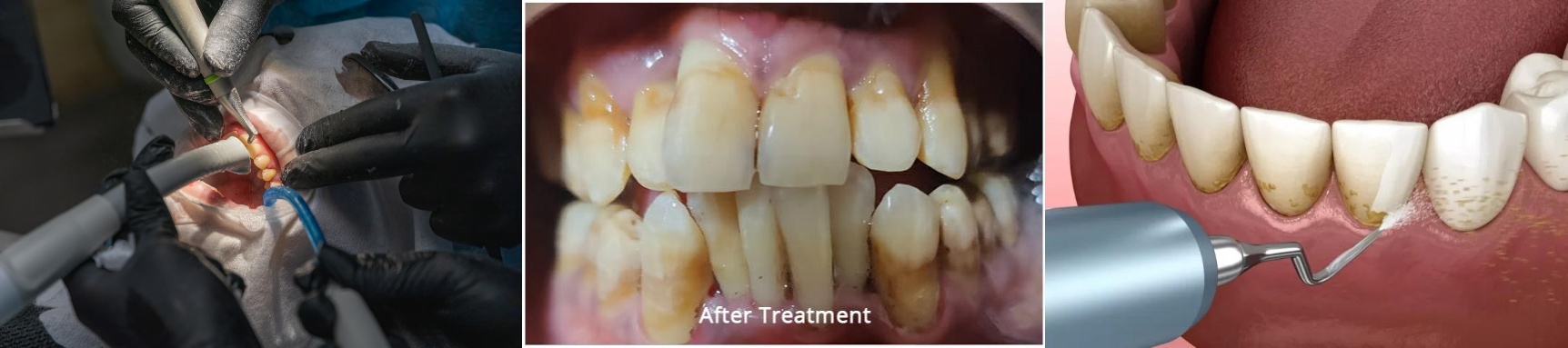
Dental Scaling is a professional dental treatment used to remove plaque and tartar (calculus) buildup from the teeth and gums. These deposits cannot be removed by regular brushing alone.
Benefits of Dental Scaling
- Reduces bleeding from gums
- Helps eliminate bad breath
- Makes teeth cleaner and brighter
- Prevents gum diseases
- Helps keep teeth healthy for a longer time
When Should You Get Dental Scaling?
- If your gums bleed while brushing
- If there is yellow or black buildup on teeth
- If you have persistent bad breath
- If stains are caused by tea, coffee, tobacco, or smoking
Is Dental Scaling Painful?
Dental scaling usually causes only mild discomfort and very little pain. In some cases, the dentist may use local anesthesia if needed.
How Long Does It Take?
The procedure usually takes around 20–45 minutes, depending on the condition of the teeth and gums.
Care After Dental Scaling
- Avoid very hot or very cold foods/drinks for 24 hours
- Brush and floss regularly
- Avoid tobacco and gutkha
Types of Dental Scaling
1. Routine Scaling – Regular cleaning of teeth
2. Deep Scaling (Root Planing) – Deep cleaning below the gum line
2. Teeth polishing
Teeth polishing is a dental cleaning procedure that removes plaque, tartar stains, and bacteria from the tooth surface to make teeth smoother and shinier. It’s usually done after scaling during a professional dental cleaning.
Common benefits
- Removes surface stains from coffee, tea, smoking, etc.
- Helps reduce plaque buildup
- Makes teeth feel smooth and clean
- Can improve breath freshness
- Helps maintain gum health
Types of polishing
- 1. Rubber cup polishing – most common; uses a spinning rubber cup with polishing paste.
- 2. Air polishing – sprays fine powder, water, and air to remove stains.
- 3. Selective polishing – only polished where stains are present.
Does it whiten teeth?
It removes external stains, so teeth may appear brighter, but it does not bleach or change the natural tooth color like whitening treatments do.
Is it safe?
Generally yes when done professionally and not excessively. Over-polishing can wear enamel if performed too often.
Aftercare
- Avoid deeply colored foods/drinks for a few hours if advised
- Brush twice daily
- Floss regularly
- Continue routine dental checkups
3. Teeth Bleaching
Teeth bleaching (also called teeth whitening) is a cosmetic dental treatment used to lighten the color of teeth and remove stains caused by food, drinks, smoking, or aging.
Common Types of Teeth Bleaching
In-office professional whitening Done by a dentist using stronger bleaching agents such as hydrogen peroxide or carbamide peroxide.
Benefits:
- Fast results (often 1–2 visits)
- Stronger whitening effect
- Safer supervision for sensitive teeth
At-home whitening kits Custom trays or whitening strips/gels used over days or weeks.
Benefits:
- More affordable
- Convenient
- Gradual whitening
Whitening toothpaste Helps remove surface stains but usually does not dramatically change tooth color.
What Causes Tooth Discoloration?:
Common causes include:
- Coffee, tea, red wine
- Smoking/tobacco
- Poor oral hygiene
- Aging
- Certain medications
Possible Side Effects
Some people experience:
- Tooth sensitivity
- Gum irritation
- Temporary discomfort
These effects are usually mild and temporary.
How Long Does Whitening Last?
Results can last from several months to a few years depending on:
- Diet
- Smoking habits
- Oral hygiene
- Type of treatment used
Tips to Maintain White Teeth
- Brush twice daily
- Use a straw for dark beverages
- Avoid smoking
- Get regular dental cleanings